

Mental health is a miracle we are apt not to notice until it slips from our grasp – at which point we may wonder how we ever managed to do anything as complicated and beautiful as order our thoughts sanely and calmly.
A mind in a healthy state is, in the background, continually performing a near-miraculous set of manoeuvres that underpin our moods of clear-sightedness and purpose. To appreciate what mental health involves (and therefore what makes up its opposite), we should take a moment to consider some of what will be happening in the folds of an optimally functioning mind:
First and foremost, a healthy mind is an editing mind: an organ that manages to sieve, from thousands of stray, dramatic, disconcerting or horrifying thoughts, those particular ideas and sensations that actively need to be entertained in order for us to direct our lives effectively.
Partly this means keeping at bay punitive and critical judgements that might want to tell us repeatedly how disgraceful and appalling we are, long after harshness has ceased to serve any useful purpose. When we are interviewing for a new job or taking someone on a date, a healthy mind doesn’t force us to listen to inner voices that insist on our unworthiness. It allows us to talk to ourselves as we would to a friend.
At the same time, a healthy mind resists the pull of unfair comparisons. It doesn’t constantly allow the achievements and successes of others to throw us off course and reduce us to a state of bitter inadequacy. It doesn’t torture us by continually comparing our condition to that of people who have, in reality, had very different upbringings and trajectories through life. A well-functioning mind recognises the futility and cruelty of constantly finding fault with its own nature.
Along the way, a healthy mind keeps a judicious grip on the faucet of fear. It knows that, in theory, there is an endless number of things that we could worry about: a blood vessel might fail, a scandal might erupt, the plane’s engines could sheer from their wings… But it has a good sense of the distinction between what could conceivably happen and what is in fact likely to happen. It is able to leave us in peace as regards the wilder eventualities of fate, confident that awful things will either not unfold or could be dealt with ably enough if ever they did so. A healthy mind avoids catastrophic imaginings: it knows that there are broad and stable stone steps, not a steep and slippery incline, between itself and disaster.
A healthy mind has compartments with heavy doors that shut securely. It can compartmentalise where it needs to. Not all thoughts belong at all moments. While talking to a grandmother, the mind prevents the emergence of images of last night’s erotic fantasies; while looking after a child, it can repress its more cynical and misanthropic analyses. Aberrant thoughts about jumping on a train line or harming oneself with a sharp knife can remain brief peculiar flashes rather than repetitive fixations. A healthy mind has mastered the techniques of censorship.
A healthy mind can quieten its own buzzing preoccupations in order, at times, to focus on the world beyond itself. It can be present and engaged with what and who is immediately around. Not everything it could feel has to be felt at every moment.
A healthy mind combines an appropriate suspicion of certain people with a fundamental trust in humanity. It can take an intelligent risk with a stranger. It doesn’t extrapolate from life’s worst moments in order to destroy the possibility of connection.
A healthy mind knows how to hope; it identifies and then tenaciously hangs on to a few reasons to keep going. Grounds for despair, anger and sadness are, of course, all around. But the healthy mind knows how to bracket negativity in the name of endurance. It clings to evidence of what is still good and kind. It remembers to appreciate; it can – despite everything – still look forward to a hot bath, some dried fruit or dark chocolate, a chat with a friend, or a satisfying day of work. It refuses to let itself be silenced by all the many sensible arguments in favour of rage and despondency.
Outlining some of the features of a healthy mind helps us to identify what can go awry when we fall ill; at the heart of mental illness is a loss of control over our own better thoughts and feelings. An unwell mind can’t apply a filter to the information that reaches our awareness; it can no longer order or sequence its content. From this, any number of painful scenarios ensue:
Ideas keep coming to the fore that serve no purpose, and unkind voices echo ceaselessly. Worrying possibilities press on us all at once, without any bearing on the probability of their occurrence. Fear runs riot.
Simultaneously, regrets drown out any capacity to make our peace with who we are. Every bad thing we have ever said or done reverberates and cripples our self-esteem. We are unable to assign correct proportions to anything: a drawer that doesn’t open feels like a conclusive sign that we are doomed; a slightly unfriendly remark by an acquaintance becomes proof that we shouldn’t exist. We can’t grade our worries and zero in on the few that might truly deserve concern.
We can’t temper our sadness. We cannot overcome the idea that we have not been loved properly, that we have made a mess of the whole of our working lives, that we have disappointed everyone who ever had faith in us.
Every compartment of the mind is blown open. The strangest, most extreme thoughts run unchecked across consciousness. We begin to fear that we might shout obscenities in public or do harm with the kitchen knives.
In the worst cases, we lose the power to distinguish outer reality from our inner world. We can’t tell what is outside of us and what is inside, where we end and others begin; we speak to people as if they were actors in our own dreams.
At night, such is the maelstrom and the ensuing exhaustion, we become defenceless before our worst apprehensions. By 3am, after hours of rumination, doing away with ourselves no longer feels like a remote or unwelcome notion.
However dreadful this sounds, a paradox is that, for the most part, mental illness from the outside tends not to look as dramatic as we think it might. The majority of us, when we are mentally unwell, will not be foaming at the mouth or insisting that we are Napoleon. We won’t be making speeches about alien invasions or declaring that we control space and time. Our suffering will be quieter, more inward, more concealed, and more contiguous with societal norms; we’ll sob mutely into the pillow or dig our nails silently into our palms. Others may not even realise for a long time, if ever, that we are in difficulty. We ourselves may not accept the scale of our sickness.
The dated and clichéd images of ‘madness’ – with their obscenities, ravings and bombast – may be frightening in themselves, but our collective focus on them suggests a concealed search for reassurance. We depict mental illness in colourful and extreme terms to convince ourselves of our own sanity; to put some clear blue water between our own fragile states and those of people dismissively termed ‘lunatics’. We thereby fail to acknowledge the extent to which mental illness is ultimately as common, and as essentially unshameful, as its bodily counterpart – and also comprises a host of more minor ailments, the equivalents of cold sores and broken wrists, abdominal cramps or ingrowing toenails.
When we define mental illness as a loss of command over the mind, few of us can claim to be free of all instances of unwellness. True mental health involves a frank acceptance of how much ill health there will have to be in even the most ostensibly competent and meaningful lives. There will be days when we simply can’t stop crying over someone we have lost. Or when we worry so much about the future, we wish that we hadn’t been born. Or when we feel so sad, it seems futile even to open our mouths. At such times, we should be counted as no less ill than a person laid up in bed with flu – and as worthy of attention and sympathy.
It doesn’t help our fears that we are at least a hundred years away from properly fathoming how the brain operates – and how it might be healed. We are in the mental arena roughly equivalent to where we might have been in bodily medicine around the middle of the seventeenth century, as we slowly built up a picture of how blood circulated around our veins or how our kidneys functioned. In our attempts to find fixes, we are akin to those surgeons depicted in early prints who cut up cadavers with rusty scissors and clumsily dug around innards with a poker. We might be well on the way to colonising Mars before we definitively grasp the secrets to the workings of our own minds.

We are not especially stupid, but what we are dealing with is uncommonly abstruse. We get a sense of this at moments when the mind hints at its underlying depths; for example, as we fall asleep and behold voices and images from different periods of our lives – and feel just how densely packed and continually and manically observant our minds are, how much they have stored, and how many pains and inchoate longings remain locked inside us.
Looking at the paintings of the American artist Cy Twombly (1928–2011), we might derive a particular feeling for the intricacies of certain mental processes that are normally tidied away before we speak; it is as if Twombly were showing us what ordinary consciousness might look like in its raw state. His art moves us by the honesty of its intimate portraiture of inner reality. We might wonder, given the tumult within, how we ever manage to sound even slightly coherent or focused, and acquire a new awe at the miraculous, flawed, brilliant organs through which we are compelled to steer our always unsteady path through existence.
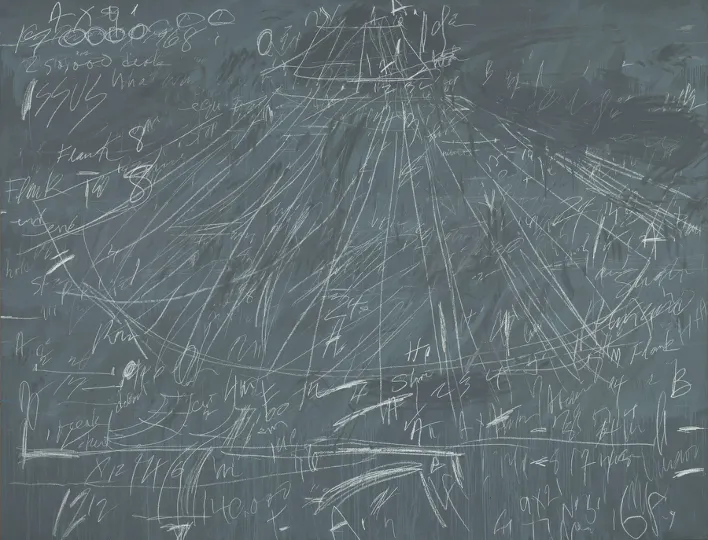
Cy Twombly, Synopsis of a Battle, 1968.
For most of history, the only help on offer for our ailing minds was grotesque in nature. Just as primitive medicine made us endure leeches and anaesthetic-free amputations, so early psychiatry suggested electric shocks and random incisions in our frontal lobes. More commonly, we were tied to a wall in a prison-like clinic and left to scream. Only gradually did we learn to approach our mental troubles with humanity and care, and recognise that the apparently insane were merely ailing versions of us all, only particularly deserving of love and gentleness.
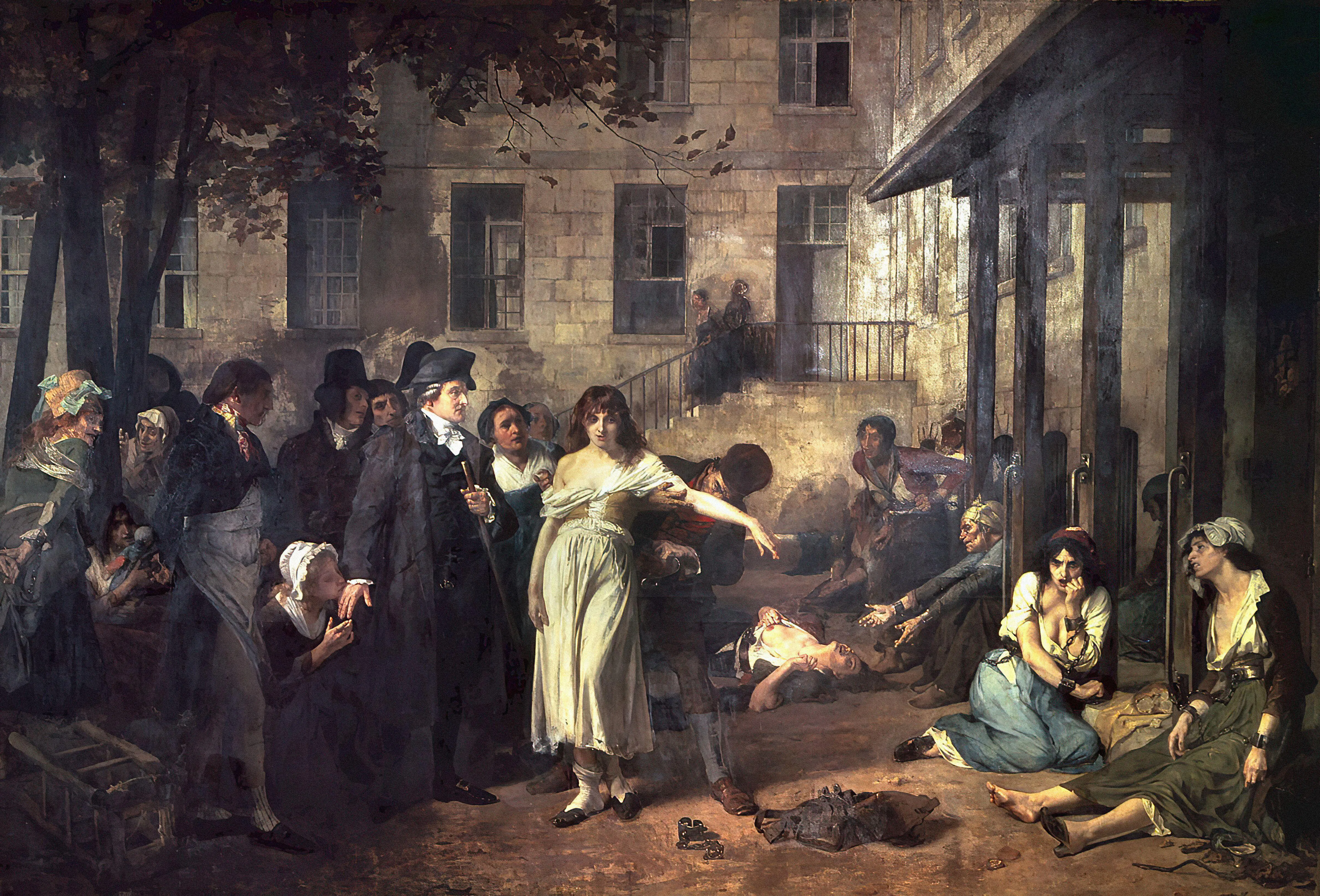
Tony Robert-Fleury, Dr. Philippe Pinel at the Salpêtrière, 1795. This painting depicts Pinel ordering the removal of chains from patients at the Paris Asylum for Insane Women.
The lessons in this topic set out to consider, with modesty and compassion, how we might best approach some of our states of mental unwellness. They outline a number of strategies – fourteen in all – that we might adopt in a search for calm, respite and consolation.
It is surely no coincidence that in many parts of Europe, asylums for the mentally ill were, from the Renaissance onwards, opened up in converted monasteries, signalling an implicit connection between the solace sought from religion and from psychiatry. The best of these asylums (and there were very few) promised a dignified refuge from the pressures of society and the terrors of the mind. They may have had extensive gardens – most famously like the one at the Saint-Paul Asylum in Saint-Rémy, where an ailing Vincent van Gogh spent a year in 1889, sitting very still in his room for hours at a time and then painting dozens of sublime canvases of irises, cypresses and pine trees – that may to this day help to persuade the inconsolable to keep living.
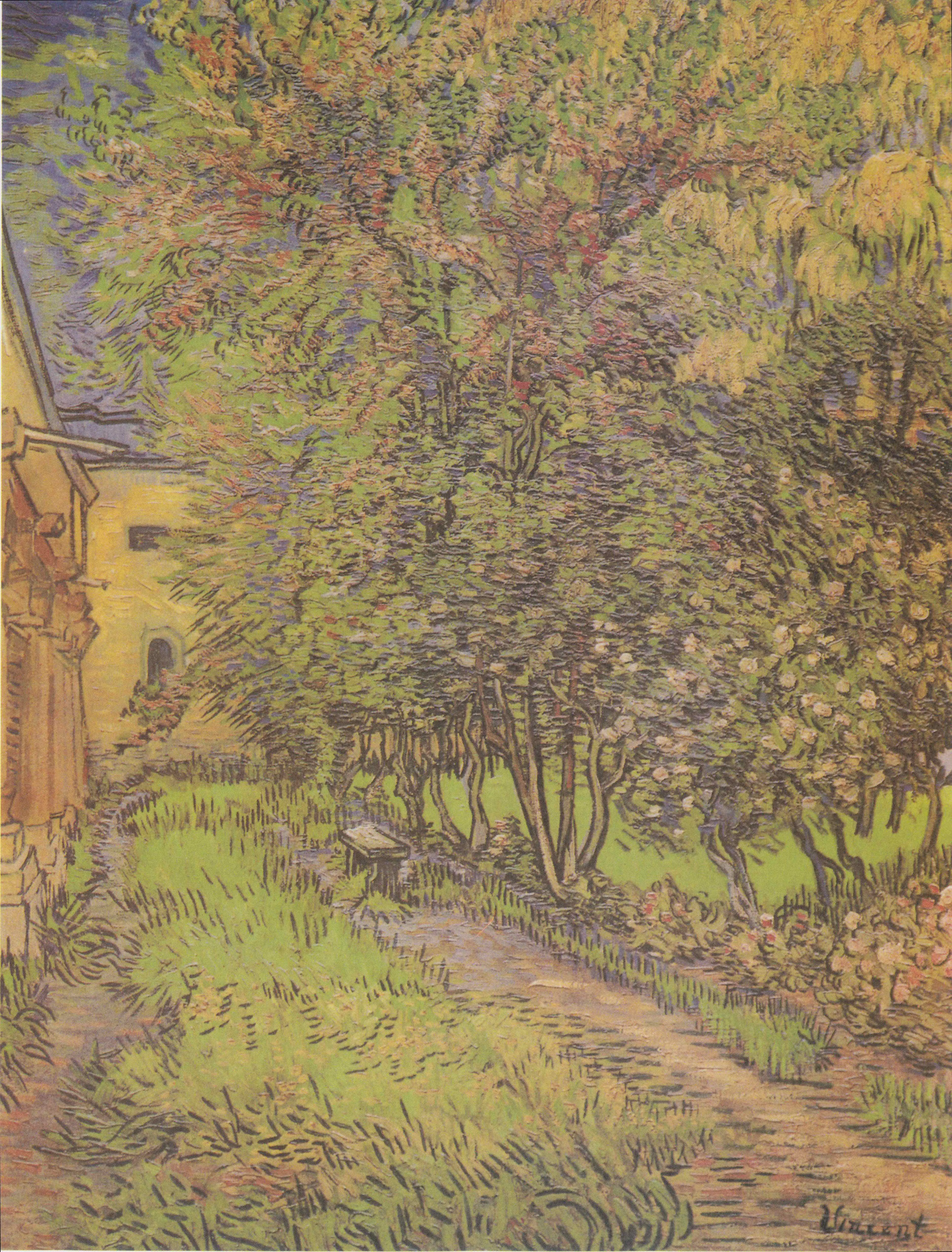
Vincent van Gogh, The Garden of Saint-Paul Hospital, 1889.
In its way, this topic aims to be a sanctuary, a walled garden filled with nourishing psychological vegetation, and with comfortable benches on which to sit and recover our strength, in an atmosphere of kindness and fellow-feeling. It outlines a raft of therapeutic moves with which we might approach our most stubborn mental afflictions and instabilities. It sets out to be a friend through some of the most difficult moments of our lives.